Better Balance

The fear of falling stops many older adults from
stepping out of their comfort zone and enjoying life.
By first understanding what balance is, you can take the appropriate steps to work on your balance. Balance is largely an automatic reflex. And as you move into your 50s and 60s, you may notice yourself becoming less stable.
Loss of muscle mass, slower reflexes, and worsening eyesight can affect your sense of balance. Certain health problems — such as inner ear disorders, hearing loss, heart rhythm disturbances, and neuropathy (nerve damage that causes weakness, numbness, and pain) — may upset balance, too.
And shaky balance can lead to a downward spiral — less activity, weaker muscles, and a growing fear of falling.
Harvard balance experts present a 53-page report for anyone who has experienced the fear of falling and craves more stability.
Practical ideas based on current research and evidence to help you become steadier on your feet — no matter what your age!
| ✓ | The body’s balance systems. Whether you’re moving or standing still, balance requires interplay among several systems: the central nervous system (brain and spinal cord), the vestibular system (brain and inner ear), the visual system (brain and eyes), and a vast web of position-sensing nerves called proprioceptors in peripheral areas of the body, such as the legs. Understanding how these systems work together can help you see what it takes to stay upright and safe! |
| ✓ | Investigating balance problems. If you frequently feel unsteady on your feet or suffer from dizziness or vertigo (the sensation of the room spinning), you’ll want to read this section. Too often balance problems and risks of falling aren’t addressed until a condition becomes serious. Read all about how your doctor would begin the process of diagnosing a balance problem. |
| ✓ | Activities that enhance balance. The workouts in this report are designed to help improve your balance skills, both while you hold steady (static balance) and while you’re in motion (dynamic balance). You’ll get simple balance exercises you can sprinkle throughout your day. In addition, experts at the American College of Sports Medicine suggest ways you can pose balance challenges for yourself. |
| ✓ | Balance workouts and your overall fitness plan. Better balance is important. But to maintain your overall health, you need to do more than just balance exercises. You need to engage in physical activity on a regular basis. Read all about the current guidelines and the benefits of daily balance-boosting activities. |
| ✓ | Workouts for every level. You’ll find a list of equipment that you’ll need for your workouts, explanations of terms used in the workouts, and some advice on structuring your program. Importantly, you will also find a list of workouts for everyone — no matter your level of fitness. |
| ✓ | Plus, you get many different strategies you can try to see what works for you! |
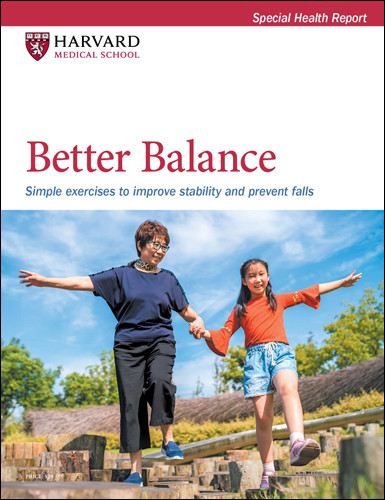
Better Balance brings you:
| ✓ | Insight into age-related balance problems |
| ✓ | Guidance on when to see a doctor about balance problems |
| ✓ | Reassurance that it’s never too late to take steps to improve your balance |
| ✓ | Safety tips to safeguard your home and help prevent falls |
| ✓ | How to choose the right equipment and start simple at-home exercises to help improve your balance |
| ✓ | And so much more! |
Special Bonus Section
Included in this report is Safety Measures to Prevent Falls, which walks you through common health risks for falls and provides expert advice to help reduce them. Roughly 80% of all falls occur in the home. That’s why you’ll also get a detailed checklist to “fall-proof” your home for confidence and safety.
