

Hip bursitis vs. arthritis: How to tell the difference

Fitness for longevity: Which type matters most?

Ministrokes linked to elevated risk of dementia

Continuous glucose monitors benefit people who don't need insulin

CoQ10: Should you take this popular supplement if you're on a statin?

Microplastics: A hidden health threat?

Oat vs. dairy milk: Nutrition, benefits, and downsides

What is tempeh? Benefits, nutrition, and how to use it

Healing after food poisoning

Whole grains may improve several heart risk factors at once
Chronic pain Archive
Articles

Pelvic physical therapy: Another potential treatment option
This treatment approach may help provide relief for many women with chronic pelvic pain and urinary symptoms.
The exact cause of pelvic pain for many women can be elusive, despite lots of tests and scans. In some cases, the symptoms are related to a problem that is often overlooked, says Dr. Eman Elkadry, an instructor in obstetrics, gynecology, and reproductive biology at Harvard Medical School. Pelvic pain may stem from a pelvic floor muscle problem that can be helped by a specialized form of physical therapy known as pelvic physical therapy.
"Although pelvic physical therapy may not work for everyone, it can be quite effective for certain individuals," says Dr. Hye-Chun Hur, director of the Division of Minimally Invasive Gynecologic Surgery at Harvard-affiliated Beth Israel Deaconess Medical Center and associate faculty editor of Harvard Women's Health Watch. She stresses that pelvic physical therapy is normally undertaken by a trained female practitioner.

Opioids after heart surgery: A cautionary tale
Research we're watching
A recent study found that nearly one in 10 people who received opioid pain relievers following heart surgery continued to take them for three to six months — a time point when no one should still be experiencing pain from the operation.
The study included nearly 36,000 people with private health insurance who had a coronary artery bypass graft (known as CABG or bypass surgery) or a heart valve replacement between 2003 and 2016. People who were prescribed more than 40 5-mg tablets of oxycodone (Oxycontin, Roxicodone, others) or an equivalent amount of a similar drug were at a much higher risk of prolonged opioid use than people who were prescribed lower doses. Other factors that increased a person's odds of taking opioids long-term included having CABG, being female, or having a history of chronic pain or alcoholism.

Can home remedies help my sciatica?
Ask the doctors
Q. Is there anything I can do at home to ease sciatica pain?
A. Sciatica is a condition that causes pain that radiates down the buttock and the leg. It occurs when one of the two sciatic nerves in your body, which run from your back down to your toes, is compressed or irritated. Most often the problem is triggered by a ruptured disc or arthritis in the lower spine. This condition can be quite painful, but there are some strategies you can use at home to ease your discomfort.

CBD for chronic pain: The science doesn’t match the marketing
CBD, a non-psychoactive component in cannabis, is emerging as a promising pharmaceutical agent to treat pain and other conditions. Unfortunately, few studies in humans have examined its effectiveness, and the cannabis industry’s profit motive is driving a wave of dubious claims about what CBD can do.

Chronic pain linked to higher risk of heart attack and stroke
Research we're watching
People with chronic pain may be more likely to have a heart attack or stroke than those without chronic pain, according to a study published online May 7, 2020, by the journal Pain Medicine.
From 2001 to 2005, researchers identified 17,614 Taiwanese people who had used pain relievers for at least three months. The most common causes of pain were spinal disorders, arthritis, and headaches; the pain relievers included both over-the-counter drugs and prescription opioids. For the comparison group, researchers used 35,228 people without chronic pain who were matched by age and sex to those in the first group.

Relief for sore backsides
You can ease the pain of sitting too much by getting up and moving around. Try these stretches and exercises.
An excess of inactivity isn't just bad for overall health; it can literally be a pain in the butt. You could end up with a sore backside if you sit at a desk all day long, if you're confined to a wheelchair, if you sit on hard surfaces for long periods, or if you're simply not as active as you once were. Whatever the reason for rear-end pain, it's time to stand up and get a little relief.
What's causing your pain?
When you sit in a chair, you're resting on your ischial tuberosities, or "sit bones" — the bony prominences at the bottom of your pelvis. You're also placing lots of pressure on your lower back, nerves, muscles, tendons, and ischial bursae (fluid-filled sacs near the ischial bones). Sitting can aggravate (or in some cases cause) these common sources of buttocks pain.

Will my herniated disc heal on its own?
Ask the doctors
Q. I have a herniated disc in my back. What does this mean, and will this heal on its own?
A. A herniated disc, also called a slipped or ruptured disc, is a common problem that can happen at any age, but becomes more common in middle age and beyond. It occurs when the jelly-like filling in a spinal disc — one of the pads between your vertebrae, or spinal bones — breaks through the disc's outer shell, called the annulus, and bulges through the tear. When this happens, the material may press on nearby nerves, which can cause a host of symptoms including inflammation, pain, and numbness. Where in your body you experience these symptoms depends on the location of the herniated disc. For example, if the disc is in your neck, you may feel pain down your shoulder and into your arm. If the disc is lower in your back, it may irritate your sciatic nerve, which can cause pain that radiates through your buttock and down your leg. The good news is that in most cases — 90% of the time — pain caused by a herniated disc will go away on its own within six months. Initially, your doctor will likely recommend that you take an over-the-counter pain reliever and limit activities that cause pain or discomfort. But in some cases, if you've been using these strategies and haven't noticed an improvement, your doctor may recommend further evaluation and possibly an additional treatment strategy, such as physical therapy. Surgery is typically not recommended unless the problem does not respond to therapy, if you are having an increasingly hard time moving, or if your doctor believes the spinal cord is being compressed.

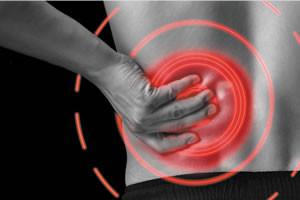
Back pain: What you can expect from steroid injections
After trying and failing to control back pain with conservative measures, injections of anti-inflammatory steroid medication are an option. The benefit may be small and short term, and the therapy has risks such as infection.

Hip bursitis vs. arthritis: How to tell the difference
Fitness for longevity: Which type matters most?
Ministrokes linked to elevated risk of dementia
Continuous glucose monitors benefit people who don't need insulin
CoQ10: Should you take this popular supplement if you're on a statin?
Microplastics: A hidden health threat?
Oat vs. dairy milk: Nutrition, benefits, and downsides
What is tempeh? Benefits, nutrition, and how to use it
Healing after food poisoning
Whole grains may improve several heart risk factors at once
Free Healthbeat Signup
Get the latest in health news delivered to your inbox!
Sign Up
