

Hip bursitis vs. arthritis: How to tell the difference

Fitness for longevity: Which type matters most?

Ministrokes linked to elevated risk of dementia

Continuous glucose monitors benefit people who don't need insulin

CoQ10: Should you take this popular supplement if you're on a statin?

Microplastics: A hidden health threat?

Oat vs. dairy milk: Nutrition, benefits, and downsides

What is tempeh? Benefits, nutrition, and how to use it

Healing after food poisoning

Whole grains may improve several heart risk factors at once
Diabetes Archive
Articles

More older adults are not aware of hypertension
In the journals
Do you know if you have hypertension (high blood pressure)? And if you do, are you treating it effectively? Study findings published online Sept. 9, 2020, by JAMA found that people's awareness and control of their high blood pressure have both dropped in recent years, especially among older adults.
The study pulled data from the National Health and Nutrition Examination Survey. It found that the number of people who knew they had hypertension fell 8% from 2013 to 2018. Among those who were aware of their condition, more than half did not manage it adequately. In particular, adults ages 60 and older were less likely to control their high blood pressure than younger people. Lack of engagement could be a factor. Researchers noted that among people who hadn't been to their doctor in the past year, fewer than 10% had controlled their blood pressure.

Smell training can help fix distortions caused by viruses
In the journals
"Smell training" could help treat certain smell disorders, suggests a study published online Nov. 19, 2020, by the journal The Laryngoscope. Two common types of smell disorders are phantosmia, in which you smell an odor that isn't there, and parosmia, in which you smell strange and often unpleasant odors — for example, cinnamon smells rotten. Both disorders are believed to occur because of damage to the smell pathways (nerves that carry information from the nose to the brain), usually caused by a bacterial or viral infection. They also may result from a head injury or smoking.
The study enlisted 153 people who had experienced changes in their ability to smell after recovering from a viral infection, such as a cold or the flu. They were tested for how well they could smell a variety of odors. Smells related to phantosmia and parosmia also were identified. The people then received smell training kits that consisted of random odors as well as ones linked to their phantosmia or parosmia.

Did my diet cause my gout?
Ask the doctors
Q. I eat a lot of shellfish and recently developed gout in my knee. Did my diet cause the condition?
A. As you probably know, gout is a painful form of arthritis that occurs when high levels of a waste product called uric acid build up in the body. It can settle into joints, where it forms sharp crystals that can trigger inflammation, redness, and pain. Your diet may have aggravated the condition, but didn't cause it.

Why won't some health care workers get vaccinated?


Avoiding the pain of kidney stones
If you've had a stone, the problem is likely to recur — but it doesn't have to. Use these strategies for prevention.
The pain associated with kidney stones has been described by some as more excruciating than childbirth. Kidney stones are small, hard stones, formed when high levels of minerals in your urine start to crystallize in your kidneys, forming a pebble-like mass. The pain comes when these stones migrate from your kidneys through the ureters, which are the narrow tubes that carry urine from your kidneys into your bladder.
"Kidney stone pain is not subtle," says Dr. Gary Curhan, a professor of epidemiology at the Harvard T.H. Chan School of Public Health. It typically starts in the flank, at the side of the lower back. Sometimes if the stone moves, the pain migrates to the front of the body.

Is fibromyalgia real?
Ask the doctors
Q. My friend was recently diagnosed with fibromyalgia, but it seems like she might be imagining her symptoms. Is fibromyalgia a real condition?
A. The short answer to your question is yes. Fibromyalgia is a real condition that affects some four million Americans. It's a chronic pain syndrome that experts believe may be caused by a malfunctioning nervous system. Researchers using magnetic resonance imaging to examine the brains of people with fibromyalgia have found abnormalities in the part of the brain that processes pain signals from the body. It appears that this part of the brain is essentially boosting the intensity of normal pain signals, potentially causing the body to feel pain without a physical cause.
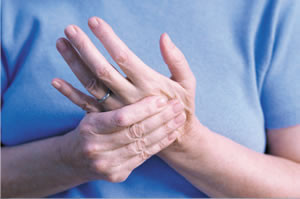
On call: What causes shaky hands?
Q . I've started to notice a slight shakiness in my writing hand. Is this just normal aging or should I get my shaky hands checked out?
A. If the shakiness is sudden or recent, you should talk to a doctor. It may be nothing serious—for example, just a reversible side effect from a medication or from too much caffeine. However, tremors could be an early sign of a more serious condition, like Parkinson's disease. In that case, you could benefit from early diagnosis and starting treatment.

12 minutes of exercise might lower risks for heart disease and diabetes
News briefs
Ever wonder how much exercise time it takes to start reducing your risk for heart disease and diabetes? It could be as little as 12 minutes, according to a Harvard study published Nov. 17, 2020, in Circulation. Scientists analyzed blood from more than 400 middle-aged men and women before and just after they'd pedaled for 12 minutes on cycling machines, reaching a vigorous rate. In particular, scientists measured levels of almost 600 natural body chemicals (metabolites). Exercise produced significant changes in most metabolites. For example, the level of one metabolite linked to heart disease and diabetes fell by 29%. Another metabolite tied to diabetes risk and liver disease fell by 18%. That suggests, but doesn't prove, that 12 minutes of daily exercise (that includes vigorous activity) might reduce the risk of heart disease and diabetes. What if you're more of a moderate-intensity exerciser? "We don't know yet if moderate-intensity exercise would have a similar effect on metabolites. But study participants started off with very light exercise, and each minute the intensity increased," says Dr. Gregory Lewis, the study's senior author and a cardiologist at Harvard-affiliated Massachusetts General Hospital.
Image: © artvea/Getty Images
Hip bursitis vs. arthritis: How to tell the difference
Fitness for longevity: Which type matters most?
Ministrokes linked to elevated risk of dementia
Continuous glucose monitors benefit people who don't need insulin
CoQ10: Should you take this popular supplement if you're on a statin?
Microplastics: A hidden health threat?
Oat vs. dairy milk: Nutrition, benefits, and downsides
What is tempeh? Benefits, nutrition, and how to use it
Healing after food poisoning
Whole grains may improve several heart risk factors at once
Free Healthbeat Signup
Get the latest in health news delivered to your inbox!
Sign Up
