









Sardines, mackerel, and anchovies: How to make fishy fish taste better
Try these shopping, prepping, and cooking techniques — known to win over even fish-avoiders.
- Reviewed by Rani Polak, MD, Chef, MBA, Contributor
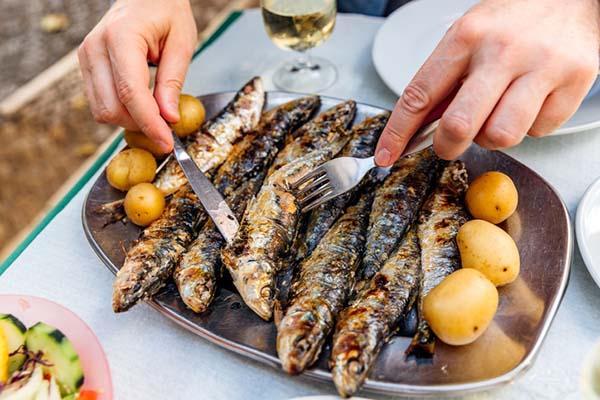
Health experts praise fish as a top protein source, but fatty fish gets special attention: the American Heart Association recommends two servings of fish a week, preferably oily types such as salmon, sardines, and mackerel. That’s because these fatty fish are among nature’s richest sources of omega-3 fatty acids, long linked with better heart health.
The catch? These same fish “tend to taste the fishiest,” which can be off-putting for some people, says Dr. Rani Polak, founding director of the Culinary Healthcare Education Fundamentals (CHEF) Coaching program at Harvard’s Institute of Lifestyle Medicine. “But there’s a lot you can do to overcome fishy flavor,” he says. “Traditional recipes are full of delicious ideas.”
Why fish tastes fishy
Fat carries flavors, so compared with lean, mild-tasting fish like cod, “omega-3-rich fish have a richer, bolder flavor,” notes Polak. “Some people like it and others don’t.”
And of course, any fish can become “fishy” if not handled properly. Fish contain a protective compound called trimethylamine oxide (TMAO) in their cells. When a fish dies, bacteria begin to break down TMAO, giving off a telltale fishy smell. The longer a fish sits, the fishier it becomes.
How to make fish taste less fishy
A few simple strategies can help bring out the best in fatty fish.
Start fresh. Buy from a busy, reputable market and ask what was caught most recently. Fresh fish should be free of fishy, sour, or ammonia odor; all indicate spoilage. The freezer case can sometimes be a good alternative, because “high-quality frozen fish is often frozen soon after it’s caught, sometimes right on the boat,” says Polak. “It might be 'fresher’ than fish that’s been sitting at the market for a few days.”
Add some acid. Acidic ingredients like lemon, lime, or other citrus; vinegar; or wine work well with fishy flavors, says Polak. The acid brightness cuts through the richness of oily fish.
Season with aromatics. Onions, garlic, ginger, shallots, fresh or dried herbs, tomatoes, and peppers all add assertive flavors that complement fatty fish.
Soak it in milk. Many swear by the technique of soaking raw fish in milk for 20 to 30 minutes before cooking. While the science isn’t clear, it’s thought that milk proteins can bind with some of the fishy-tasting compounds in the fish. Discard the milk after soaking, and pat the fish dry with a paper towel before cooking.
Take it outside. Cooking fish on the grill keeps lingering cooking odors out of your kitchen, which can make the whole meal seem less fishy. A bonus: fatty fish takes especially well to grilling, baking, and roasting, and it’s more forgiving of a little overcooking than leaner fish, says Polak. “It doesn’t dry out as quickly.”
Open a tin. Canned fish is a convenient starting point for lots of tasty meals. Tuna is a familiar standby. But for even more omega-3s try sardines or salmon, suggests Polak, which also work well in recipes that call for canned tuna. And today there’s a wide variety of fish and flavorings to explore — from sardines with preserved lemon, to mackerel in spicy tomato sauce, or lemon-olive marinated white anchovies (boquerones). Compare labels to find the lowest-sodium brands.
Easy meals with fatty fish
To boost your intake of fatty fish, look for recipes that are simple to put together (for an especially versatile one, see “Baked Mackerel with Fresh Herbs and White Wine”). Here are some other quick ideas:
- Power salad. Top mixed greens with cooked or canned sardines or salmon, white beans, cherry tomatoes, and onion; drizzle with oil and vinegar.
- Lemony mackerel pasta. Saute a few chopped garlic cloves in olive oil, then toss with cooked whole-wheat spaghetti, flaked cooked or canned mackerel, lemon zest and juice to taste, and a few handfuls of arugula.
- Salmon burgers. Serve atop cooked greens, or burger-style on whole-wheat buns.
- Smoky mustard-maple glazed salmon. Smoked paprika or chipotle pepper add complex flavor.
Baked Mackerel with Fresh Herbs and White WineThis go-to recipe works with just about any fatty fish, says Dr. Rani Polak, of Harvard’s Institute of Lifestyle Medicine. Try it with salmon, steelhead trout, or tuna. Ingredients
In a small bowl, combine wine, lemon juice, mixed herbs, and leek. Place fish in a glass dish (or other container that won’t react with acid) and add the wine mixture. Cover and marinate in the refrigerator for 30 minutes. Preheat oven to 350° F. Place fish in a baking dish, skin-side down, pour marinade over top and sprinkle with salt and pepper. Bake 10 minutes, or until fish flakes easily with a fork. Makes 4 servings. Recipe by Rani Polak, MD |
Image: © Alexander Spatari/Getty Images
About the Author

Joyce Hendley, Staff Writer
About the Reviewer

Rani Polak, MD, Chef, MBA, Contributor
Disclaimer:
As a service to our readers, Harvard Health Publishing provides access to our library of archived content. Please note the date of last review or update on all articles.
No content on this site, regardless of date, should ever be used as a substitute for direct medical advice from your doctor or other qualified clinician.