








New guidelines urge routine prostate cancer screening for most men
News briefs
- Reviewed by Robert H. Shmerling, MD, Senior Faculty Editor, Harvard Health Publishing; Editorial Advisory Board Member, Harvard Health Publishing

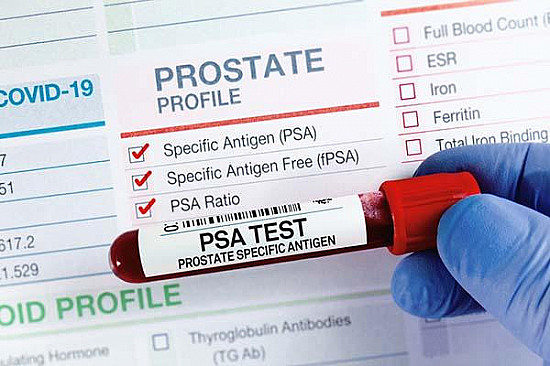
The American Cancer Society (ACS) has made a major update to its guidelines on prostate cancer screening, published online Nov. 12, 2026, by CA: A Cancer Journal for Clinicians. The guidelines now recommend screening with a prostate-specific antigen (PSA) test every other year for men ages 50 to 69 at average risk for prostate cancer. Previous guidelines recommended a shared decision-making approach to screening for this group, because of concerns about potential harms and no clear benefit, such as overdiagnosis (identifying a very slow-growing prostate cancer that’s unlikely to cause symptoms or harm) and overtreatment (unnecessarily providing treatment that itself could cause harm). The new recommendations are based on findings from a recent review of several studies, which concluded that routine screening likely reduces the risk of dying from prostate cancer.
The guidelines also recommend yearly screening for other groups who have a higher-than-average risk for prostate cancer. These groups include Black men ages 45 to 69 and men who are not Black but have a strong family history of prostate cancer — that is, multiple first-degree relatives (a father, brother, or son) with prostate cancer or one relative diagnosed before age 65. For men ages 45 to 69 who are not Black and have one first-degree relative diagnosed with prostate cancer at age 65 or older, the guidelines recommend screening every other year.
After age 70, the benefits of screening are less certain. The decision to continue screening should be made after discussing the pros and cons with a clinician.
Image: © Kitsawet Saethao/Getty Images
About the Author

Lynne Christensen, Staff Writer
About the Reviewer

Robert H. Shmerling, MD, Senior Faculty Editor, Harvard Health Publishing; Editorial Advisory Board Member, Harvard Health Publishing
Disclaimer:
As a service to our readers, Harvard Health Publishing provides access to our library of archived content. Please note the date of last review or update on all articles.
No content on this site, regardless of date, should ever be used as a substitute for direct medical advice from your doctor or other qualified clinician.