

Hip bursitis vs. arthritis: How to tell the difference

Fitness for longevity: Which type matters most?

Ministrokes linked to elevated risk of dementia

Continuous glucose monitors benefit people who don't need insulin

CoQ10: Should you take this popular supplement if you're on a statin?

Microplastics: A hidden health threat?

Oat vs. dairy milk: Nutrition, benefits, and downsides

What is tempeh? Benefits, nutrition, and how to use it

Healing after food poisoning

Whole grains may improve several heart risk factors at once
Vitamins, minerals & supplements Archive
Articles

Vitamin K may offer protective health benefits in older age
In the journals
Vitamin K is an often ignored nutrient, but new research has found that low levels among older adults may increase their risk of early death. The findings were published in the June 2020 issue of The American Journal of Clinical Nutrition.
Researchers looked at about 4,000 adults ages 54 to 76 who were involved in three studies. Everyone was free of heart disease at the start of the analysis. The researchers categorized the people according to their blood levels of vitamin K, and compared that information with rates of heart disease and death over 13 years. The results showed no definite link between vitamin K levels and heart disease. However, people with the lowest vitamin K levels were 19% more likely to die during the study period than those whose K levels were adequate.

Medication may lower future hip fracture risk
In the journals
If you are ever hospitalized for a hip fracture, using an anti-osteoporosis medication may protect you from another bone fracture. A study in the September 2020 issue of Bone examined data on almost 78,000 people ages 50 and older hospitalized with hip fractures. About 10,000 were given anti-osteoporosis medication — usually alendronate (Fosamax) — within one year.
People who began treatment 15 to 84 days after their fracture were less likely to be hospitalized for another kind of fracture in the future compared with people who began treatment later. Those who first took medication after 252 days had the highest risk. The researchers were not able to measure the participants' bone density, so it's possible some people had especially strong or weak bones, which may have influenced the outcome.

Treating high blood pressure is good for heart and brain
In the journals
Lowering high blood pressure with medication is good for the brain as well as the heart, suggests a study published online May 19, 2020, by JAMA.
Scientists reviewed 14 trials involving more than 96,000 people who had their high blood pressure monitored without medication vs. those who took one or more blood pressure drugs, such as beta blockers, ACE inhibitors, and angiotensin-receptor blockers. Almost 58% were men, and the average age was 69. The people were tested for dementia or cognitive impairment (trouble learning a new task, concentrating, or making decisions) before taking medication. They were tested again an average of four years later.

New advice about a common heart variation: Patent foramen ovale (PFO)
Researchers are beginning to better understand if, when, and how to address this condition, which is linked to a newly recognized type of stroke.
In the womb, all fetuses have a foramen ovale (Latin for "oval hole") between the heart's right and left upper chambers (atria). This opening allows blood to take a shortcut within the heart rather than following a longer path through the lungs, which cannot work until they are exposed to air. After birth, when a newborn baby takes his or her first breath, the foramen ovale begins to close. Most of the time, it seals completely within a few months.
But in about a quarter of people, that doesn't happen. This anatomical variation is called a patent foramen ovale (patent means open) or PFO. Most people never know they have it, because a PFO doesn't cause any signs or symptoms. For the most part, the condition is harmless.

Will my herniated disc heal on its own?
Ask the doctors
Q. I have a herniated disc in my back. What does this mean, and will this heal on its own?
A. A herniated disc, also called a slipped or ruptured disc, is a common problem that can happen at any age, but becomes more common in middle age and beyond. It occurs when the jelly-like filling in a spinal disc — one of the pads between your vertebrae, or spinal bones — breaks through the disc's outer shell, called the annulus, and bulges through the tear. When this happens, the material may press on nearby nerves, which can cause a host of symptoms including inflammation, pain, and numbness. Where in your body you experience these symptoms depends on the location of the herniated disc. For example, if the disc is in your neck, you may feel pain down your shoulder and into your arm. If the disc is lower in your back, it may irritate your sciatic nerve, which can cause pain that radiates through your buttock and down your leg. The good news is that in most cases — 90% of the time — pain caused by a herniated disc will go away on its own within six months. Initially, your doctor will likely recommend that you take an over-the-counter pain reliever and limit activities that cause pain or discomfort. But in some cases, if you've been using these strategies and haven't noticed an improvement, your doctor may recommend further evaluation and possibly an additional treatment strategy, such as physical therapy. Surgery is typically not recommended unless the problem does not respond to therapy, if you are having an increasingly hard time moving, or if your doctor believes the spinal cord is being compressed.

How do doctors evaluate treatments for heart disease?
Studies of drugs, diets, and devices all come with their own unique set of challenges.
The best way to know if a new medical treatment truly works is with a randomized controlled trial — the "gold standard" of research studies, also known simply as a clinical trial. Volunteers are randomly assigned to receive either the new treatment or the comparison, which may be a placebo (an inactive therapy) or a treatment that's already available.
As the nation's top cause of death, cardiovascular disease has been at the leading edge of evidence generation, says Dr. Robert Yeh, director of the Smith Center for Outcomes Research in Cardiology at Harvard-affiliated Beth Israel Deaconess Medical Center. "We probably have more evidence for cardiovascular treatments than for any other field of medicine," he says. Among the studies with the greatest impact were the clinical trials that heralded new therapies to treat heart attacks. These include clot-dissolving drugs in the 1980s, followed in the 1990s by artery-opening angioplasty procedures, which remain the standard of care today. Stents, the tiny mesh tubes used in these procedures, have also been extensively studied in clinical trials (see "Testing devices: Different dilemmas").

Seed of the month: Sesame seeds
Sesame seeds may be most familiar as a topping on bagels, burger buns, and breadsticks. The tiny, tear-shaped seeds have a nutty, slightly sweet flavor that's enhanced when they're baked or lightly toasted in a skillet. Most are off-white or tan, but you can also find black varieties, which are popular in Asian cuisine.
Sesame seeds contain lignans and phytosterols, plant compounds that may have cholesterol-lowering effects. They're also a decent source of calcium and magnesium, two minerals linked to better blood pressure control.

5 tips to help you stay healthy this winter
Even in an unusual year, tried-and-true strategies are still the best way to prevent illness.
Staying healthy is likely at the top of your list almost every winter. But this year, in the midst of a pandemic, it may be even more of a concern than usual. You might wonder: should you be taking special supplements to boost your immune system, or investing in cleaning devices to zap germs?
While the viral threats may be different from usual this year, the truth is that you should still be using many of the same strategies that you use in a typical year, says Michael Starnbach, a professor of microbiology at Harvard Medical School. Below are five of his top tips that can help you keep yourself and your loved ones safe.
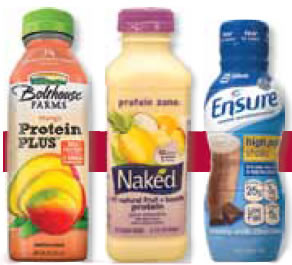
Supplemental nutrition drinks: help or hype?
Photos Courtesy of Manufacturers |
These heavily marketed liquid meals and nutrition shakes aren't always the best option for your health. Here's what you need to look for.
Supplemental nutrition shakes and drinks can be helpful for people who struggle with a loss of appetite, have difficulty chewing, have trouble preparing balanced meals, or are recovering from surgery or an illness. But these nutrition shakes aren't magic bullets for nutrition. "The danger is that people see a lot of minerals and vitamins and think more is better," says geriatrician Dr. Suzanne Salamon, an assistant professor at Harvard Medical School. "If you use the drinks as meal substitutes that might be okay. It's not okay to eat a full meal and then drink a supplement, unless the goal is to gain weight or stop weight loss. It's too many calories."
The nutrition drinks
Supplemental nutrition drinks provide a healthy balance of protein, carbohydrate, and fat. There are hundreds of varieties that fall into two general categories.

Diverticular disease of the colon
Diverticular disease develops due to a lack of dietary fiber, and is most common in the elderly, but many people never realize they have it because there are few symptoms.
Hip bursitis vs. arthritis: How to tell the difference
Fitness for longevity: Which type matters most?
Ministrokes linked to elevated risk of dementia
Continuous glucose monitors benefit people who don't need insulin
CoQ10: Should you take this popular supplement if you're on a statin?
Microplastics: A hidden health threat?
Oat vs. dairy milk: Nutrition, benefits, and downsides
What is tempeh? Benefits, nutrition, and how to use it
Healing after food poisoning
Whole grains may improve several heart risk factors at once
Free Healthbeat Signup
Get the latest in health news delivered to your inbox!
Sign Up
